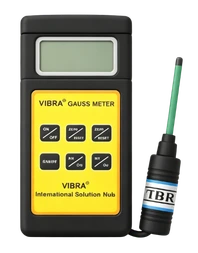
Choosing the right gauss meter for Malaysian industrial use can directly impact audit performance, compliance readiness, and measurement consistency.
Across Malaysia’s manufacturing landscape, magnetic field measurement is no longer limited to laboratories or specialist engineering environments. Industries such as food processing, pharmaceuticals, palm oil refining, electronics manufacturing, recycling, and heavy industrial automation increasingly depend on gauss meters to verify magnetic separator performance, contamination control systems, and equipment reliability.
As quality assurance expectations increase (especially for export markets, regulated products, and customer audits), the conversation has shifted from simply “having a gauss meter” to selecting the right type of meter for traceability, repeatability, and documentation.
Why This Comparison Matters for Malaysian Factories
For many factories, the most practical comparison comes down to digital vs analog gauss meters.
Digital systems are increasingly chosen because they support:
- Audit documentation and inspection traceability
- Clearer, repeatable readings
- Easier reporting workflows
- Better alignment with record-based QA systems (including HACCP and GMP documentation)
Analog gauss meters still remain relevant for:
- Rugged industrial environments
- Simple field inspections
- Budget-conscious operations
- Basic magnetic verification tasks
The best choice depends heavily on:
- Industry requirements and audit expectations
- Factory operating conditions
- Documentation standards
- Compliance exposure and customer requirements
This guide explains how both options compare in real Malaysian audit environments, including advantages, limitations, and the key features businesses often prioritise for inspection readiness.
Comparison: Digital vs Analog Gauss Meters
| Criteria | Digital Gauss Meter | Analog Gauss Meter |
| Display type | LCD/LED numerical display | Needle-based scale |
| Reading precision | High | Moderate |
| Data capture | Often supports storage/export | Manual recording only |
| Audit documentation | Strong | Limited |
| Calibration tracking | Easier to manage | More manual |
| Human reading error | Lower | Higher |
| Reporting workflow | Faster | Manual |
| Operator consistency | Better | More variable |
| Initial investment | Higher | Lower |
| Maintenance complexity | Moderate | Lower |
| Best for | Compliance-heavy environments | Simple checks / rugged use |
| Common MY applications | Pharma, food, semiconductor | Maintenance, workshops |
What Is a Gauss Meter?
A gauss meter is a magnetic field measurement device used to measure magnetic flux density generated by permanent magnets, electromagnets, magnetic separators, and industrial magnetic systems.
Most modern gauss/tesla meters use a Hall probe to measure magnetic flux density (B), commonly shown in:
- Gauss (G)
- Tesla (T)
Some instruments can also display field strength (H) in:
- Ampere per metre (A/m) (or sometimes oersted), depending on the meter and mode.
(Example technical reference: gauss/teslameter manuals based on Hall probe measurement.)
In Malaysian industrial environments, gauss meters are commonly used for:
- Verifying separator magnet strength
- Monitoring magnetic degradation
- Supporting contamination control
- Conducting preventive maintenance
- Ensuring equipment consistency
- Supporting audit and inspection procedures
Why Magnetic Field Measurement Matters During Audits
Industrial audits increasingly focus on:
- Traceability
- Repeatability
- Documented verification procedures
For Malaysian manufacturers, auditors may evaluate not only whether inspections are performed, but also whether results are recorded consistently, linked to an inspection frequency, and supported by evidence of maintenance or calibration where relevant.
Magnetic field measurement can become part of:
- HACCP verification
- GMP inspections
- ISO quality management systems
- Internal QA audits
- Supplier audits
- Preventive maintenance reviews
This is particularly relevant in industries handling:
- Food products
- Pharmaceuticals
- Electronics
- Medical devices
- Palm oil products
Where magnetic separators are installed to prevent ferrous contamination or protect downstream equipment.
Auditors may request:
- Historical inspection logs
- Verification intervals
- Evidence of separator checks
- Calibration/maintenance evidence (depending on the quality system and how measurement results are used)
Record-keeping emphasis is consistent with HACCP principle requirements in standards such as MS 1480.
Why Digital Records Can Make Audits Easier
Better Traceability During Inspections
One major reason digital systems can help during audits is improved traceability and easier retrieval of records. Digital gauss meters can support:
- Stored measurements
- Exportable inspection data
- Reduced transcription errors
- Standardised recording across shifts and operators
In regulated environments, purely manual recording often increases the chance of missing entries, inconsistent formats, or illegible logs.
Reduced Operator Interpretation Errors
Analog systems depend heavily on visual interpretation of needle positions. Small differences in viewing angle, lighting, or operator handling can lead to:
- Inconsistent readings
- Reporting discrepancies
- Repeatability issues
Digital displays provide clear numerical outputs that reduce interpretation variability.
Easier Integration Into SOP Workflows
Many Malaysian factories integrate magnetic field measurement into:
- QA checklists
- Maintenance SOPs
- Audit preparation routines
- Food safety verification programs
Digital units often make these workflows easier because readings can be captured quickly and standardised.
Data Logging and Documentation Support
HACCP systems rely on strong documentation and record-keeping. Digital logging can make records easier to maintain, review, and retrieve during audits—especially when multiple operators handle inspections.
(Source: Ministry of Health – HACCP/GMP)
Comparing Accuracy and Calibration Needs
Digital Gauss Meter Accuracy
Digital gauss meters are generally designed for:
- Higher sensitivity
- Greater precision
- Faster readings
- Improved repeatability
This makes them particularly useful for:
- Pharmaceutical validation
- Semiconductor manufacturing
- Precision industrial audits
- Testing environments
Many digital models also support:
- Auto-ranging
- Peak hold functionality
- AC/DC field measurement (model-dependent)
- Multi-unit conversion
Analog Gauss Meter Accuracy
Analog gauss meters remain useful for:
- Basic field verification
- Maintenance inspections
- Rugged environments
- Non-critical magnetic checks
However, gauss meter calibration and accuracy can depend more heavily on:
- Operator skill
- Needle interpretation
- Viewing consistency
- Environmental conditions
Why Calibration and Traceability Matter
For audits that rely on measurement results, companies are often expected to show instruments are maintained and calibrated—supported by calibration certificates and traceability evidence (especially when calibration is performed by ISO/IEC 17025-conforming laboratories).
(Source: Department of Standards Malaysia / SAMM, materials on metrological traceability and calibration certificate expectations.)
This is especially relevant when:
- Measurement results are used as acceptance criteria
- A QA system depends on measurement thresholds
- Customer audits request traceable evidence
(Source: SAMM Circular on traceability statements and ISO/IEC 17025 alignment.)
Pros and Cons: Digital vs Analog Gauss Meters
Digital Gauss Meter Pros
- Higher reading precision
- Easier inspection documentation
- Reduced operator interpretation error
- Better audit traceability
- Faster reporting workflow
- Easier SOP integration
- Simplifies calibration management and recordkeeping
Digital Gauss Meter Cons
- Higher upfront investment
- More sensitive electronics
- May require operator familiarisation
- Potentially higher replacement costs
Analog Gauss Meter Pros
- Lower acquisition cost
- Simple operating method
- Durable in rugged environments
- Lower maintenance complexity
- Effective for quick checks
Analog Gauss Meter Cons
- Manual documentation only
- More operator variability
- Limited audit traceability
- Less suitable for regulated industries
- More effort required to maintain consistent inspection records
Which Industries in Malaysia Commonly Prefer Digital?
Food Manufacturing
Food manufacturers often rely on:
- Repeatable verification checks
- Traceable inspection records
- Consistent documentation practices
Magnetic separators are commonly used to reduce ferrous contamination risks in:
- Powder processing
- Packaging lines
- Conveyor systems
- Ingredient handling
Digital meters can simplify inspection documentation and reduce record errors.
(Source: MOH FSQD HACCP/GMP scheme guidance, Oct 2024)
Pharmaceutical Manufacturing
Pharmaceutical environments often require:
- High precision measurement
- Strong calibration traceability
- Validation-ready reporting
- GMP-aligned inspection routines
National Pharmaceutical Regulatory Agency Good Manufacturing Practices (NPRA GMP) guidance commonly emphasises calibration/maintenance records for measuring equipment used in controlled environments.
(Source: NPRA GMP inspection preparation guidance, Oct 2023)
Palm Oil Processing
Palm oil mills and refineries commonly use gauss meters to inspect:
- Magnetic traps
- Conveyor magnets
- Separation systems
- Contamination controls
Because humidity and oily residue are common in these environments, durability and probe protection become important purchasing factors.
Electronics and Semiconductor Manufacturing
Electronics facilities often require:
- Stable readings
- Fine sensitivity
- Tight repeatability
- Consistent verification over time
Digital systems are commonly used because tolerance expectations can be tighter.
When Analog Gauss Meters Still Make Sense
Despite the shift toward digital reporting workflows, analog units still have operational value.
Analog meters can make sense for:
- Small factories with simple checks
- Budget-sensitive teams
- Maintenance departments
- Rugged field environments
- Quick operational verification
- Backup inspection equipment
Some facilities use a hybrid approach:
- Digital meters for audits and documentation-heavy checks
- Analog meters for quick daily verification
This can balance cost efficiency with audit readiness.
Top Features to Look For (Audit-Ready Purchasing Checklist)
1) Measurement Precision and Repeatability
Precision matters during:
- GMP audits
- ISO inspections
- Validation procedures
- Separator verification
2) Data Capture and Record Handling
If your operation depends on inspection logs, prioritise:
- Stored readings
- Export options (USB/software, model-dependent)
- Operator-friendly recording workflows
3) Calibration Traceability
Prioritise:
- Clear calibration intervals
- Easy certificate tracking
- Stable long-term performance
- Vendor support for recalibration
Traceability expectations often tie back to ISO/IEC 17025 calibration practices.
4) Probe Durability
Malaysia’s industrial environments may expose probes to:
- Humidity
- Heat
- Dust
- Palm oil residue
- Mechanical vibration
Durable probes reduce downtime and prevent inconsistent readings.
5) Multi-Unit Support
Some businesses prefer meters that support:
- Gauss
- Tesla
- A/m
This improves flexibility across multiple applications.
6) Peak Hold Functionality
Peak hold is useful for:
- High-strength magnets
- Separator inspections
- Intermittent field testing
Common Audit Mistakes During Magnetic Field Measurement
Incorrect Probe Positioning
Probe angle and placement can significantly affect readings. Inconsistent positioning causes inconsistent results, especially on separators where geometry matters.
Using Expired Calibration Evidence
Auditors may question inspection validity if a device lacks current calibration documentation—especially when measurement results are used as a pass/fail threshold.
Poor Documentation Practices
Manual recording methods can lead to:
- Missing records
- Transcription errors
- Non-standard formats
Inconsistent Operator Technique
Different operators may interpret analog readings differently, which creates repeatability concerns.
Ignoring Environmental Conditions
Heat, humidity, dust, and corrosion can affect:
- Probe stability
- Sensor reliability
- Measurement consistency over time
Pricing Considerations for Malaysian Businesses
Pricing depends on:
- Accuracy level
- Probe type
- Data capture features
- Calibration support
- Industrial durability
Analog Gauss Meter Pricing
Generally:
- Lower upfront investment
- Lower operational complexity
- Suitable for simpler checks
Digital Gauss Meter Pricing
Typically:
- Higher initial cost
- Better documentation efficiency
- Stronger support for record-heavy environments
- Faster reporting workflows
For many compliance-heavy operations, the long-term operational value of digital documentation and consistency can outweigh the higher purchase price.
How to Choose the Right Gauss Meter for Your Facility
Choose Digital if Your Business Prioritises:
- Audit readiness and traceable records
- Documentation-heavy QA programs (HACCP/GMP/ISO workflows)
- Precision measurement and repeatability
- Multi-user consistency
- Faster reporting and standardised inspection logs
Choose Analog if Your Business Prioritises:
- Lower upfront cost
- Simple usage
- Rugged field inspections
- Basic verification tasks
- Environments where documentation requirements are minimal
The Growing Shift Toward Digitised Audit Workflows
As Malaysian industries modernise, many audit workflows are becoming more documentation-driven and data-focused. This increases pressure to maintain:
- Traceable records
- Standardised procedures
- Repeatable checks
- Faster retrieval of verification evidence
Digital gauss meters support this shift by making it easier to standardise readings and keep consistent records.
Deciding Between Digital and Analog Meters
Digital gauss meters are widely chosen for modern industrial audits because audits increasingly prioritise traceable records, repeatable measurement, and stronger documentation practices. Analog gauss meters still remain useful for quick checks and rugged environments, but digital units tend to be the preferred option in documentation-heavy industries.
If your business is evaluating industrial magnetic testing solutions, we can help you identify the right equipment for your operational and compliance needs. At Sematic Magnet, we support businesses looking for a reliable magnet manufacturer in Malaysia with expertise in gauss meter supply, magnetic device applications, industrial testing support, and magnetic field measurement solutions for modern industrial environments.