E-waste is becoming one of the fastest-growing waste streams globally, and Malaysia is increasingly experiencing the impact. Rising electronics consumption and increasing volumes of discarded devices are contributing to higher e-waste generation, putting more pressure on recycling and recovery systems.
For recycling operators, this creates both a challenge and a commercial opportunity. Electronic scrap contains valuable recoverable materials such as steel, copper, aluminium, and specialty metals, but recovery efficiency depends heavily on the quality of the separation process.
This is where the overband magnetic separator plays an increasingly important role. In modern e-waste processing lines, overband magnets help automate ferrous extraction, improve downstream sorting efficiency, reduce contamination, and protect expensive processing equipment from metal damage.
For many operators today, improving ferrous metal recovery is no longer just about waste handling. It is increasingly tied to operational profitability, ESG expectations, recycling efficiency, and long-term competitiveness in the circular economy.
What Is an Overband Magnetic Separator?
An overband magnetic separator is a suspended magnetic system installed above conveyor belts to automatically remove ferrous metals from moving material streams.
These systems are used across a wide range of recycling and bulk materials handling environments, including:
- E-waste processing lines
- Scrap metal recycling plants
- Plastics recycling operations
- Municipal solid waste facilities
- Construction and demolition recycling
- Mining and quarry operations
The separator creates a magnetic field capable of attracting ferrous materials such as:
- Steel fragments
- Iron particles
- Rust flakes
- Electronic chassis components
- Metal brackets
- Fasteners and screws
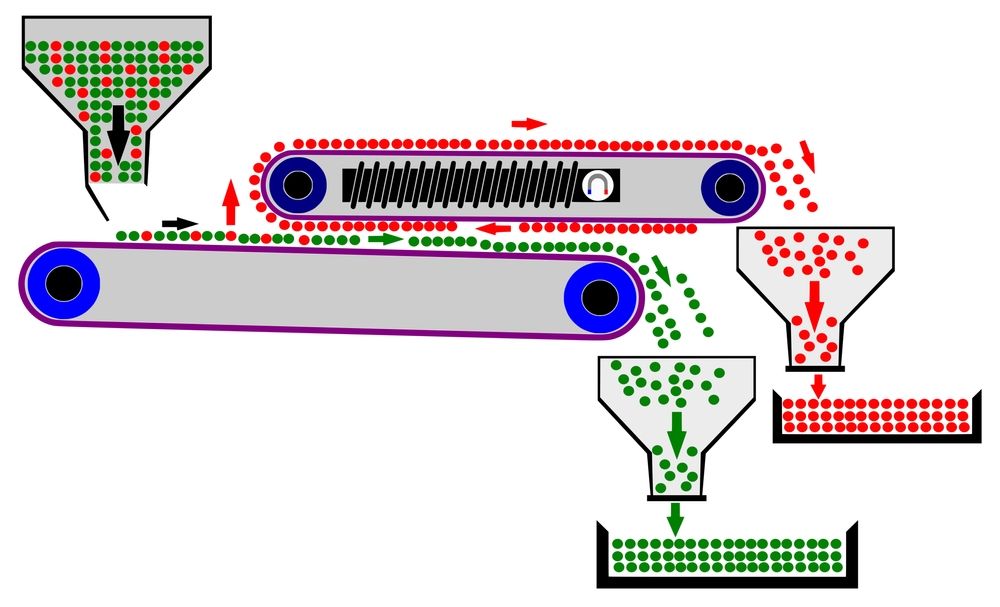
Most modern overband magnetic separator systems use a self-cleaning belt mechanism. Once ferrous materials are captured by the magnetic field, the moving belt automatically transports the metals away from the conveyor before discharging them into a separate collection point.
This allows continuous automated sorting without interrupting production flow.
Why Overband Magnets Matter in E-Waste Recycling Malaysia
Recovering Value From Electronic Scrap
E-waste is highly complex compared to many traditional recycling streams. A single batch of electronic scrap may contain:
- Plastics
- Ferrous metals
- Copper wiring
- Aluminium housings
- Circuit boards
- Rare metal components
- Batteries
- Composite materials
Without proper separation systems, valuable recoverable materials can become contaminated, lowering resale value and reducing overall recovery efficiency.
An overband magnetic separator helps remove ferrous contamination early in the recycling process. This creates cleaner downstream material streams and improves the effectiveness of subsequent sorting technologies.
For example:
- Eddy current separators perform better when ferrous contamination is reduced
- Optical sorting systems achieve higher accuracy with cleaner material streams
- Manual sorting requirements may decrease
- Copper and aluminium recovery purity may improve
In many e-waste recycling Malaysia facilities, improving ferrous metal recovery can directly contribute to stronger operational economics through cleaner outputs and more efficient downstream sorting.
How Overband Magnets Automate Sorting
The Basic Working Principle
An overband magnetic separator is typically suspended above a conveyor carrying shredded e-waste material.
As material moves beneath the magnetic system:
- Ferrous metals are attracted upward by the magnetic field
- Non-magnetic materials continue moving along the conveyor
- The self-cleaning belt carries captured ferrous materials away
- Metals are discharged into a separate collection area
This automated process allows continuous separation without requiring extensive manual labour.
In high-throughput recycling facilities, automation is especially important because manual sorting alone may struggle to handle:
- Large waste volumes
- Fine shredded materials
- Mixed electronic scrap
- High-speed conveyor systems
Automated ferrous extraction also helps improve consistency across different processing batches.
Cross-Belt vs Inline Installation
The positioning of an overband magnetic separator significantly affects recovery performance.
Cross-Belt Installation
In a cross-belt setup, the separator is mounted perpendicular to conveyor flow.
Advantages may include:
- Easier retrofit installation
- Effective removal of larger ferrous objects
- Common use in mixed recycling systems
- Good for general-purpose recovery
Cross-belt systems are often used where waste streams are variable and retrofit flexibility matters.
Inline Installation
In an inline configuration, the separator is mounted parallel to material flow.
Advantages may include:
- Improved capture performance in certain burden profiles
- Better recovery consistency in some high-throughput setups
- Strong suitability for continuous industrial processing lines
Inline systems are often considered in larger recycling facilities where feed conditions and conveyor layout are controlled.
Permanent vs Electromagnetic Overband Magnets
Choosing the Right System
Selecting the correct overband magnetic separator depends on operational requirements, material characteristics, and production volume.
Permanent Overband Magnets
Permanent systems use fixed magnetic materials that generate a constant magnetic field without electrical power.
Advantages
- Lower operating cost
- Reduced energy consumption
- Minimal electrical infrastructure
- Simpler maintenance requirements
- Reliable continuous operation
Limitations
- Lower magnetic reach (application-dependent)
- Less effective for deeper burden extraction in some setups
- Reduced flexibility compared to electromagnetic systems
Permanent systems are often suitable for:
- Medium-volume recycling
- Mobile recycling plants
- Smaller facilities
- Lower-depth conveyor applications
For businesses seeking lower operating costs, permanent overband systems can provide an efficient long-term solution.
Electromagnetic Overband Magnets
Electromagnetic systems generate magnetic fields using electrically powered coils.
Advantages
- Stronger magnetic force at distance in many industrial designs
- Better recovery of deeply buried ferrous metals in higher burden depths
- Better performance in many high-throughput operations
- On/off control and operational flexibility (by design)
- Strong suitability for large or dense ferrous materials
Limitations
- Higher energy consumption
- Increased maintenance requirements
- Cooling system requirements in some designs
These systems are commonly used in:
- Heavy-duty recycling operations
- Large industrial shredding lines
- High-volume e-waste processing environments
In operations with deep material burden or high conveyor throughput, electromagnetic systems are often selected to improve ferrous metal recovery performance.
Optimizing Belt Speed for Maximum Purity
Why Conveyor Speed Matters
Many recycling operators focus heavily on magnetic strength while overlooking conveyor speed optimisation.
In practice, conveyor speed can significantly affect separation performance because it influences:
- The time ferrous particles spend in the magnetic field
- The stability of material flow under the magnet
- How cleanly ferrous is lifted away from the burden layer
If conveyor speed is too fast:
- Ferrous particles may not fully separate
- Fine contaminants can remain in downstream material
- Recovery consistency may decrease
If conveyor speed is too slow:
- Throughput efficiency drops
- Processing bottlenecks may occur
- Production costs may increase
An effective overband magnetic separator setup balances:
- Conveyor speed
- Burden depth
- Material density
- Particle size
- Magnetic field strength
- Feed consistency
This becomes especially important in e-waste recycling Malaysia operations where incoming waste streams may vary from batch to batch.
Common Challenges in E-Waste Recycling Malaysia
Mixed and Inconsistent Waste Streams
Electronic waste rarely arrives in standardised form.
Facilities may process:
- Consumer electronics
- Server equipment
- Industrial control systems
- Telecommunications hardware
- Home appliances
- Manufacturing rejects
Each waste stream may contain different:
- Ferrous densities
- Particle sizes
- Moisture levels
- Contamination profiles
This variability makes flexible magnetic separation systems increasingly important.
Humidity and Tropical Conditions
Malaysia’s climate introduces additional operational challenges for recycling facilities.
High humidity and heat can contribute to:
- Corrosion
- Dust buildup
- Belt wear
- Moisture-related contamination
- Increased maintenance requirements
Facilities may require more durable magnetic system designs suitable for humid industrial environments.
In some applications, armoured belt systems can help improve durability when processing abrasive or sharp electronic scrap materials.
Protecting Downstream Equipment
An overband magnetic separator is not only a recovery tool. It also acts as a protective barrier for downstream equipment.
Removing ferrous debris early helps protect:
- Shredders
- Crushers
- Granulators
- Conveyors
- Eddy current separators
This can reduce:
- Blade damage
- Maintenance costs
- Unexpected downtime
- Equipment wear
- Production interruptions
For high-volume recycling facilities, preventing even a single major equipment failure can significantly improve operational ROI.
Integrating Overband Magnets With Other Recycling Systems
Building a Complete Recovery Line
Modern e-waste recycling Malaysia facilities rarely rely on a single separation technology.
Instead, multiple systems are integrated to improve overall recovery efficiency.
An overband magnetic separator is commonly paired with:
- Eddy current separators
- Magnetic drum separators
- Optical sorting systems
- Air classification systems
- Density separation systems
A typical recycling flow may involve:
- Primary shredding
- Overband magnetic separator extraction
- Secondary shredding
- Eddy current separation
- Optical sorting
- Final metal refinement
Each stage improves material purity before the next separation process begins.
Integrated systems can support:
- Higher ferrous metal recovery
- Better non-ferrous purity
- Lower contamination levels
- Improved downstream efficiency
ROI and Business Impact
Why Recovery Efficiency Matters Financially
Improving ferrous metal recovery affects more than operational cleanliness.
Higher recovery efficiency can contribute to:
- Better resale value of materials
- Reduced contamination penalties
- Lower labour dependency
- Reduced machine wear
- More stable throughput
- Improved ESG positioning
As sustainability reporting becomes increasingly important, recycling performance is also gaining visibility among:
- Investors
- Regulators
- Industrial buyers
- Export markets
Businesses that improve separation quality may strengthen both operational efficiency and commercial competitiveness.
For many operators, investing in higher-quality magnet engineering and separation design becomes part of a broader long-term optimisation strategy.
Compliance and Environmental Considerations in Malaysia
E-Waste and Scheduled Waste Management
Certain types of electronic waste in Malaysia can fall under scheduled waste rules. For example, the Environmental Quality (Scheduled Wastes) Regulations 2005 include SW110, which covers waste from electrical and electronic assemblies when they contain specified hazardous components (or are contaminated with certain substances).
If scheduled waste applies to your material stream, operators generally need to follow DOE requirements for correct classification, compliant handling and storage, and using authorised/approved parties for transport and treatment/disposal where required.
Informational only: regulatory obligations can vary by waste type and activity. Confirm requirements with the Department of Environment (DOE) or a qualified environmental compliance professional.
(Source: Department of Environment Malaysia)
Future Trends in E-Waste Recovery
Smarter and More Automated Recycling
The future of e-waste recycling Malaysia is expected to involve increasingly advanced recovery systems.
Emerging trends include:
- AI-assisted sorting
- Robotics integration
- Sensor-based material identification
- EV battery recycling
- Rare earth material recovery
- Circular economy initiatives
As electronic products become smaller and more complex, recycling systems will likely require increasingly precise separation technologies.
This is driving demand for more specialised industrial magnet capabilities focused on customised separation engineering, higher-purity recovery systems, and integrated recycling optimisation.
Increasing E-waste Processing Efficiency with Overband Magnets
As e-waste volumes continue rising, recycling operators are under increasing pressure to improve recovery efficiency, reduce contamination, and maximise operational profitability. A properly configured overband magnetic separator can significantly improve ferrous metal recovery while helping protect downstream equipment and support cleaner material separation throughout the recycling process.
For businesses looking to strengthen e-waste recycling Malaysia operations, partnering with experienced magnetic specialists can help improve long-term recovery performance and operational reliability. At Sematic Magnet Malaysia, we work with industrial clients to develop customised magnetic system solutions supported by application engineering, testing expertise, and practical industrial separation experience.