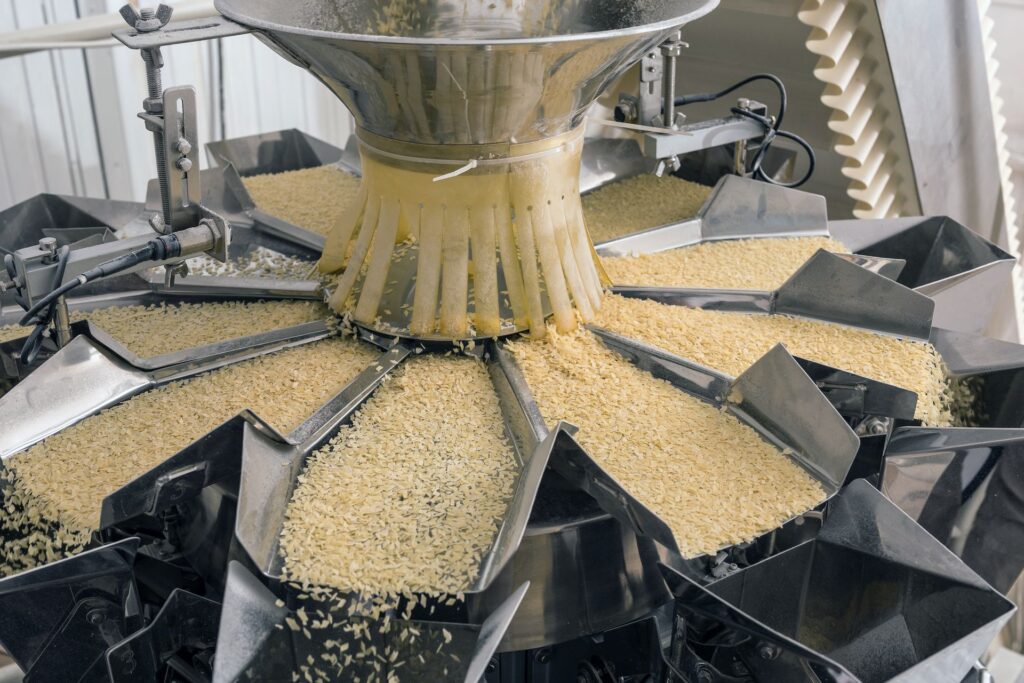
In the vibratory feeder food industry, consistency directly impacts product quality, compliance, and overall efficiency. Whether handling flour, milk powder, spices, or grains, unstable material flow can lead to inaccurate filling, product waste, and unexpected downtime.
This is where industrial vibrators become essential. Within an automated feeding system, they help smooth discharge from hoppers, reduce bridging, and stabilise feeding rates across packaging lines.
However, many Malaysian manufacturers face a key decision when selecting the right system: Should you use pneumatic vibrators or electric vibrators for food packaging applications?
The answer depends on your production setup, hygiene expectations, utilities, and long-term operating costs. This guide breaks down both options for the vibratory feeder food industry in Malaysia, so you can choose the most suitable solution for your packaging line.
Quick Comparison: Pneumatic vs Electric Vibrators for Food Packaging
| Area | Pneumatic Vibrators | Electric Vibrators |
| Power Source | Compressed Air | Electricity |
| Precision | Lower fine control | High precision control |
| Hygiene Suitability | Depends on air quality management | Depends on sealing/installation quality |
| Operating Cost | Can rise with air demand and leaks | Often steadier in continuous duty |
| Force Output | Can deliver strong impact (type-dependent) | Consistent vibration (type-dependent) |
| Noise Level | Often louder (type/mounting-dependent) | Often quieter (type/mounting-dependent) |
| Maintenance | Simple vibrator, more air-system dependency | Motor/bearing upkeep required |
| Best Use Case | Sticky/dense materials; intermittent “knock-off” | Precise filling; continuous dosing |
| Suitability for Vibratory Feeder Food Industry | Moderate | High |
What Role Do Industrial Vibrators Play in Food Packaging?
In a well-designed automated feeding system, industrial vibrators help maintain consistent material movement from storage to final packaging.
Key Functions in the Vibratory Feeder Food Industry
- Ensuring continuous material flow in hoppers
- Reducing clogging in powder and granular systems
- Supporting stable dosing and filling
- Reducing production interruptions
Common Packaging Challenges Solved
- Powder bridging (especially flour and milk powder)
- Inconsistent feeding rates
- Uneven product distribution
- Sudden flow stoppages during high-speed operations
Without the right vibration system, even advanced machinery can struggle to maintain stability. That’s why selecting the correct vibrator type matters.
Pneumatic Vibrators Explained
Pneumatic vibrators operate using compressed air, producing vibration through internal mechanisms such as balls, turbines, or pistons.
Key Features
- Powered by compressed air
- Can deliver strong, high-impact vibration (especially impact/piston designs)
- Mechanically simple with fewer electrical components
Where Pneumatic Vibrators Work Well
- Handling sticky or compact materials
- Breaking up material build-up in hoppers or bins
- Short, intermittent vibration applications (on-demand “assist”)
Limitations in Food Packaging
- Requires clean, dry air—air quality must be managed to reduce contamination risk
- Noise can be higher depending on the vibrator type and mounting
- Fine control is typically harder because output is tied to air pressure and flow
In the vibratory feeder food industry, pneumatic vibrators can be useful for upstream flow-assist tasks, but may be less suitable for precision-critical packaging stages.
Electric Vibrators Explained (Food Packaging Context)
Electric vibrators use motor-driven systems to generate controlled vibration, making them a strong fit for modern automated environments.
Key Features
- Adjustable frequency and amplitude (depending on controller/setup)
- Consistent vibration output for repeatable flow
- Easier integration with PLC-controlled systems for recipe-based settings
Where Electric Vibrators Excel
- Precision filling and dosing
- Continuous production lines
- Integration inside automated feeding systems where stability is critical
Limitations
- Higher upfront cost
- Washdown or dusty environments require appropriate sealing, hygienic mounting, and correct cable management
For the vibratory feeder food industry, electric vibrators are increasingly preferred where repeatability, control, and stable feeding matter most.
Head-to-Head: Pneumatic vs Electric Vibrators
Precision and Control
- Electric vibrators are easier to tune for consistent, repeatable feeding—important for accurate filling.
- Pneumatic vibrators depend on air supply conditions, so fine control can be more difficult without careful regulation.
Hygiene and Food Safety
- Electric removes dependency on compressed-air cleanliness, but hygiene still depends on sealing, installation, and cleanable design.
- Pneumatic adds a specific hygiene dependency: compressed-air quality must be managed (filters, dryers, maintenance discipline).
Energy Efficiency in Malaysia
- If vibration is frequent or continuous, utilities cost matters. Pneumatic units can become costly when air demand is high or leaks exist.
- Electric units often provide steadier operating cost in continuous-duty packaging lines.
Noise and Work Environment
- Pneumatic vibrators are often louder (especially impact-style units) but actual noise depends heavily on vibrator type, mounting method, and isolation.
- Electric vibrators are often easier to keep quiet, but installation still matters.
Maintenance
- Pneumatic vibrators can be mechanically simple, but performance depends on air system upkeep (quality, leaks, regulators).
- Electric vibrators require motor/bearing maintenance, but can deliver more predictable output and easier troubleshooting in automated environments.
Food Safety and Compliance in Malaysia
Food packaging systems must meet strict hygiene and safety expectations.
Key Requirements
- Food-grade materials (often stainless steel in exposed areas)
- Cleaning and washdown compatibility where required
- Minimisation of contamination risks (dust traps, residue build-up points, unsealed components)
Regulatory Considerations
Food hygiene requirements are governed under Malaysia’s Food Act 1983 and Food Regulations 1985, and many manufacturers align with MOH FSQD programmes such as GMP/HACCP certification to support hygiene control and documentation.
For worker safety, requirements are enforced by DOSH under Malaysia’s Occupational Safety and Health Act 1994 (Act 514) (as amended).
(Sources: Ministry of Health Malaysia, Food Safety and Quality Division (FSQD); Department of Occupational Safety and Health (DOSH) Malaysia; Attorney General’s Chambers of Malaysia (LOM))
In practice, these expectations often favour systems that are easy to control, easy to clean, and easy to keep stable under production pressure.
Authority Boost: A Practical Selection Checklist
Before choosing a vibrator, lock in a few details. This prevents “trial-and-error tuning” after installation.
1) Material Behaviour (what you’re really vibrating)
- Free-flowing vs cohesive (bridging/ratholing)
- Dusty vs oily vs moisture-sensitive
- Compaction risk under head pressure (tall hoppers, bulk storage)
2) Duty Cycle (how often it runs)
- Continuous operation vs short bursts
- How often recipes/SKUs change in a shift
- Whether vibration needs to start/stop quickly without overshoot
3) Hygiene Zone (your cleaning reality)
- Dry zone vs washdown zone
- Dust trap points around brackets, bolts, and cable entries
- Whether your team needs fast strip-down cleaning
4) Control Needs (how stable must it be?)
- Is the goal “flow assist” or “repeatable dosing support”?
- Will you run multi-product recipes requiring consistent settings?
- Does your packaging accuracy depend on stable feed rate?
5) Utilities & Maintainability
- If pneumatic: air quality discipline + leak control
- If electric: sealing, cable routing, isolation mounts, access for maintenance
- Space for inspection (don’t hide vibrators behind panels you can’t open)
This checklist also makes vendor discussions easier because you’re specifying the application, not just the part.
Cost Considerations for Malaysian Manufacturers
While many businesses focus on upfront pricing, the real cost difference shows up in day-to-day operation.
Pneumatic Vibrators
- Lower initial investment
- Operating cost can rise when air demand is continuous, air treatment is strict, or leaks are common
Electric Vibrators
- Higher upfront cost
- Often better long-term value in continuous operations due to stability, control, and simpler “recipe” repeatability
For businesses scaling an automated feeding system, electric vibrators often provide stronger long-term ROI in continuous-duty packaging environments.
Which Vibrator Is Better for Food Packaging Lines?
The best choice depends on your specific application within the vibratory feeder food industry.
Choose Pneumatic Vibrators If:
- You handle dense or sticky materials that need “impact assist”
- You need intermittent vibration rather than constant vibration
- Your facility already has a well-managed compressed air system
Choose Electric Vibrators If:
- You need precise, consistent feeding for accurate filling
- You operate high-speed packaging lines where stability matters
- You prioritise predictable operating cost and easier PLC integration
Common Mistakes When Selecting Industrial Vibrators
Choosing the wrong vibrator can lead to long-term inefficiencies.
Avoid These Mistakes
- Focusing only on upfront cost
- Ignoring hygiene risks (air quality, sealing, cleanability)
- Overlooking utilities impact in continuous operations
- Not aligning the vibrator selection with the automated feeding system
- Using non-food-grade equipment in exposed areas
How Vibrator Selection Impacts Your Automated Feeding System
Your choice of industrial vibrators directly affects how well your automated feeding system performs.
Key Impacts
- Feeding accuracy and consistency
- Production speed and efficiency
- Equipment downtime
- Product quality and compliance
In the vibratory feeder food industry, even small improvements in flow control can significantly improve overall production performance.
Future Trends in the Vibratory Feeder Food Industry in Malaysia
As automation increases, the demand for precision and efficiency continues to grow.
Emerging Trends
- Greater adoption of electric vibrators in automated systems
- Increased focus on energy efficiency and predictable operating cost
- Integration with smart manufacturing systems (recipe settings, diagnostics, monitoring)
- Higher hygiene and compliance expectations for food-contact and near-contact equipment
These trends indicate a shift toward more controlled and efficient vibration solutions.
Choosing the Right Industrial Vibrator
Choosing between pneumatic and electric solutions is not about selecting the most powerful option, but the most suitable one for your vibratory feeder food industry setup. The right choice improves consistency, reduces downtime, and enhances the overall efficiency of your automated feeding system.
At Sematic Magnet Factory Malaysia, we help businesses optimise industrial vibrators for food packaging applications. If you are planning to upgrade or refine your system, explore our industrial vibrator supply, testing, and R&D services to build a more reliable and efficient production line.