Choosing between repairing vs replacing your industrial separator is a cost, risk, and compliance decision, not just a technical one.
Across Malaysia’s manufacturing, food processing, recycling, and heavy industries, industrial separators quietly sit at the center of quality control. When they fail, the impact is rarely isolated. It affects product integrity, regulatory compliance, operational uptime, and even brand reputation.
Yet many businesses delay action, hoping routine separator maintenance will hold things together. Others jump straight into replacement without fully understanding whether a magnet repair service in Malaysia could have extended the system’s lifespan at a fraction of the cost.
This article provides a structured, real-world framework for Malaysian B2B decision-makers. Whether you are evaluating refurbishing magnetic grates or considering a full system replacement, the goal is to help you make a decision grounded in performance, cost efficiency, and long-term risk management.
Quick Comparison: Repair vs Replace (At a Glance)
| Criteria | Repair / Refurbish | Replace |
| Upfront Cost | Lower | Higher |
| Downtime | Shorter (if planned) | Longer (installation + commissioning) |
| Performance Gain | Moderate | High |
| Lifespan Extension | Varies by condition and duty cycle (often months to several years when sound) | Typically longer than refurbishment, but depends on design & maintenance |
| Compliance Risk | Depends on condition | Lower (new specs) |
| ROI Timeline | Immediate savings | Long-term efficiency |
| Best For | Minor degradation, salvageable units | Severe wear, outdated systems |
Features to Evaluate Before Deciding
A structured assessment ensures your decision is based on measurable performance, not assumptions.
Before deciding between repair or replacement, Malaysian businesses should evaluate both technical condition and operational context.
Core Performance Indicators
- Magnetic strength retention and drop in Gauss levels
- Physical integrity of rods, grates, and housing
- Frequency of contamination incidents
- Flow efficiency and separation consistency
- Alignment with current production requirements
These factors directly influence whether separator maintenance or replacement will deliver meaningful returns.
Operational Context Matters
- High-throughput industries like plastics or recycling require consistency over long cycles
- Food and pharmaceutical sectors demand near-zero contamination tolerance
- Smaller production lines may benefit more from refurbishing magnetic grates than full replacement
Real-World Scenario
A mid-sized food processor in Johor detected a rise in metal contamination during quality checks. Instead of replacing the entire system, they opted for a magnet repair service in Malaysia, restoring performance through targeted refurbishment. This reduced downtime and preserved capital expenditure.
Signs Your Magnet Is Failing
Recognising early warning signs allows proactive intervention before costly failures occur.
Common Indicators
- Noticeable reduction in magnetic pull strength
- Visible corrosion, rust, or coating wear
- Uneven or inconsistent separation results
- Increased contamination rates in final products
- Frequent clogging or product flow disruptions
Environmental Factors in Malaysia
Malaysia’s climate is characterised by high humidity and substantial rainfall, which can accelerate corrosion—especially if drainage, cleaning routines, and protective finishes are inadequate (Source: Malaysia Meteorological Department).
In humid conditions, moisture ingress and residue build-up can also increase the risk of performance drift over time, making regular separator maintenance more critical than in drier environments.
Compliance Implications
Failing separators can create regulatory and legal exposure, especially in sensitive industries:
- Food safety non-compliance risks under Malaysia’s Food Act 1983 and Food Regulations 1985 (Source: Food Act 1983 (Act 281); Food Regulations 1985).
- Workplace safety risks and employer duties under the Occupational Safety and Health Act 1994 (Act 514), overseen by DOSH.
Can You Re-Magnetize a Rod?
Re-magnetisation is possible for many permanent magnets, but feasibility depends on the magnet material/grade, exposure to excessive heat (which can cause irreversible strength loss), and the condition of the rod assembly. A service inspection should confirm whether the rod can be re-magnetized safely and whether mechanical tolerances, seals, and corrosion state still support reliable operation.
Suitable Conditions
- Magnetic strength has degraded naturally over time
- Core material is still structurally sound
- No severe corrosion or physical damage
Unsuitable Conditions
- Cracked or bent rods
- Heavy rust penetration
- Exposure to extreme heat or chemical damage
Practical Insight
Many businesses assume re-magnetisation is a universal fix. In reality, only a proper inspection by a magnet repair service in Malaysia can determine feasibility. Misjudging this can lead to repeated failures and higher long-term costs.
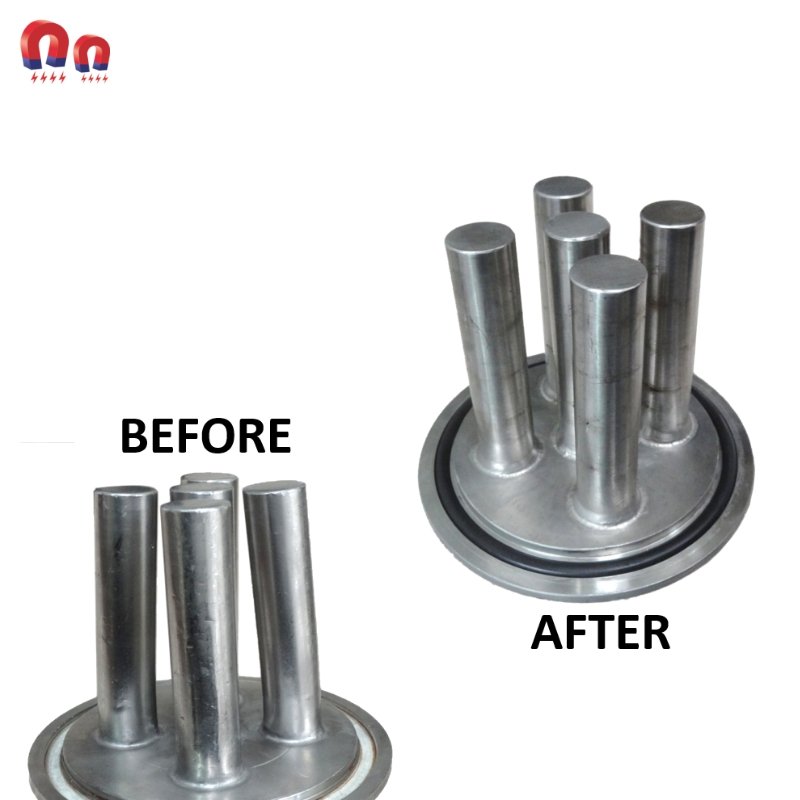
Refurbishing Magnetic Grates: What It Involves
Refurbishing magnetic grates offers a cost-efficient middle ground between minor repairs and full replacement.
Typical Refurbishment Workflow
- Full disassembly and inspection
- Removal of contaminants and residue
- Re-magnetisation of viable rods
- Replacement of damaged components
- Reassembly and performance validation
Benefits
- Lower cost compared to purchasing new units
- Faster turnaround, minimising operational downtime
- Extended lifespan without major capital investment
Limitations
- Performance may not fully match new systems
- Not viable for heavily degraded or outdated units
For many Malaysian SMEs, refurbishing magnetic grates is often the most practical short- to mid-term solution.
When It’s Cheaper to Buy New
Replacement becomes more economical when repair costs no longer justify performance outcomes.
Key Decision Triggers
- If repair + validation + downtime costs are approaching the cost of a new unit (often treated as “around half or more” as a practical checkpoint), replacement should be evaluated—especially for contamination-sensitive lines
- Frequent breakdowns despite ongoing separator maintenance
- Outdated separator design limiting production efficiency
- Increased compliance risk due to inconsistent performance
Example Scenario
A recycling facility in Klang repeatedly repaired its separator over two years. While each repair was cheaper individually, cumulative downtime and performance losses exceeded the cost of a new system. Replacement ultimately improved throughput and reduced operational disruptions.
Pricing Considerations in Malaysia
Cost decisions should include both direct expenses and hidden operational impacts.
Repair Costs
- Re-magnetisation services
- Replacement of worn components
- Labour, inspection, and transport
Replacement Costs
- Purchase of new separator system
- Installation and calibration
- Temporary production downtime
Hidden Costs
- Lost productivity during system failures
- Product rejection or recalls due to contamination
- Regulatory penalties or compliance issues
Local Insight
Working with an experienced magnet manufacturer in Malaysia ensures a realistic cost-benefit analysis, avoiding underestimation of long-term operational risks.
Pros and Cons: Head-to-Head
Repair / Refurbish
Pros
- Lower upfront investment
- Faster turnaround time
- Extends existing equipment lifespan
Cons
- Limited improvement in performance
- Risk of recurring failures
- May not meet future compliance standards
Replace
Pros
- Higher efficiency and reliability
- Better alignment with modern production needs
- Reduced long-term risk
Cons
- Higher initial capital expenditure
- Longer installation downtime
Industry-Specific Considerations in Malaysia
Different industries require different thresholds for deciding between repair and replacement.
Food & Beverage
- Near-zero tolerance for contamination
- Strong reliance on consistent separator performance
- Frequent need for separator maintenance
Manufacturing & Plastics
- Balance between efficiency and cost control
- Moderate tolerance for minor fluctuations
Recycling & Mining
- High wear-and-tear environments
- Greater focus on durability than precision
Regulatory and Compliance Considerations
Separator performance directly impacts compliance with Malaysian safety and quality standards.
Key Regulatory Bodies
- Ministry of Health Malaysia (food safety administration and enforcement through the Food Act/Regulations) (Source: Food Act 1983 (Act 281); Food Regulations 1985)
- Department of Occupational Safety and Health (DOSH) (workplace safety oversight and enforcement) (Source: Occupational Safety and Health Act 1994 (Act 514))
Why Compliance Matters
- Non-compliance can lead to enforcement action, operational disruption, or product recalls
- Poor separation increases contamination risks and liability exposure
Decision Framework: Repair or Replace?
A structured approach simplifies complex decisions into actionable criteria.
Choose Repair If
- Damage is localised and manageable
- Magnetic strength can be restored and verified
- Budget constraints require short-term solutions
Choose Replacement If
- System is outdated or inefficient
- Failures are frequent and disruptive
- Compliance risks are increasing, or validation requirements are harder to meet
Rule of Thumb
If your system requires repeated magnet repair service in Malaysia within a short period, replacement is usually the more cost-effective long-term strategy—especially when downtime and quality risk are included.
How to Choose the Right Service Partner
The right partner ensures your decision delivers both performance and ROI.
Key Selection Criteria
- Proven expertise in separator maintenance and repair
- Ability to provide unbiased repair vs replacement recommendations
- Familiarity with Malaysian operating conditions (humidity, washdown, corrosion control) (Source: Malaysia Meteorological Department)
- End-to-end service from inspection to implementation, including performance verification
An experienced industrial magnet shop in Malaysia provider can accurately assess whether refurbishing magnetic grates is viable or if replacement is necessary.
Additional Considerations Often Overlooked
Long-term operational resilience should influence your decision beyond immediate cost savings.
Scalability
- Can your current separator handle future production growth?
Technology Advancements
- New systems may offer improved efficiency, easier cleaning, and better monitoring
Risk Management
- Planned maintenance vs unplanned downtime
- Backup systems and redundancy planning
- Verification and documentation to support audits (especially for food-related operations)
(Source: Food Act 1983 (Act 281); Food Regulations 1985)
Deciding on the Best Option to Handling Separators
Repairing vs replacing your industrial separator ultimately comes down to balancing immediate cost savings with long-term operational stability and compliance.
If your system is still structurally sound, engaging a magnet repair service in Malaysia or refurbishing magnetic grates can extend its usable life efficiently. However, when failures become frequent or performance no longer meets operational and compliance demands, replacement is the smarter strategic move.
If you are unsure which path to take, we can help assess your system and recommend the most cost-effective solution. Explore our magnet supplier and repair services at Sematic Magnet to keep your operations running efficiently, reliably, and in full compliance.