Pharmaceutical magnetic separator systems are no longer optional—they are a core part of contamination control, compliance readiness, and product integrity.
Malaysia’s pharmaceutical sector continues to expand, particularly in Klang Valley and Penang, where manufacturers are increasingly focused on export readiness and regulatory alignment. With stricter GMP expectations and global supply chain pressures, even microscopic contamination can lead to rejected batches, failed audits, or costly recalls.
This is where a pharmaceutical magnetic separator becomes critical. More specifically, systems operating at 12,000 Gauss are widely used in pharma environments as a high-performance configuration for contamination control. When combined with sanitary magnet design and robust verification practices, these systems offer a reliable layer of protection across the production process.
For companies sourcing from a magnet manufacturer Malaysia or exploring a magnetic device Malaysia solution, the conversation is no longer about whether magnets are needed—it is about how advanced and compliant those systems must be.
What Is a Pharmaceutical Magnetic Separator?
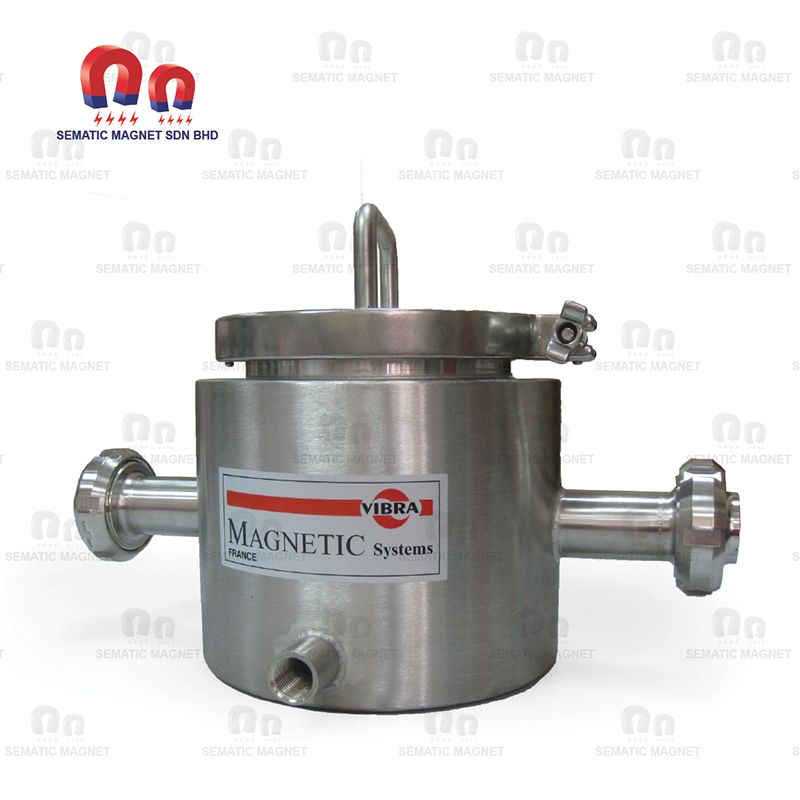
A pharmaceutical magnetic separator is a high-strength magnetic system engineered to remove metallic contaminants from pharmaceutical materials while maintaining strict hygiene and compliance expectations.
Unlike general industrial systems, a pharmaceutical magnetic separator is designed specifically for sensitive environments such as API production, tablet manufacturing, and liquid formulations.
Main Characteristics
- High magnetic strength, often reaching 12,000 Gauss
- Stainless steel construction, typically SS316L for pharmaceutical use
- Fully sealed design to reduce contamination ingress
- Smooth, polished surfaces for hygiene
- Compatibility with powders, granules, and liquids
What Makes It Pharma-Grade
- Ability to capture very fine metallic particles in appropriate process conditions
- Integration into GMP-aligned contamination-control approaches
- Designed for easier cleaning and validation
- Built to reduce contamination risks during operation
A properly designed pharmaceutical magnetic separator is not just a filtration tool. It is a contamination-control system that supports product quality and compliance readiness.
Why Is It Important in Pharmaceutical Manufacturing?
A pharmaceutical magnetic separator directly impacts product safety, compliance, and operational efficiency.
Pharmaceutical production involves highly sensitive materials, and even the smallest metal particle can compromise an entire batch. This makes contamination control a non-negotiable requirement.
Main Benefits
- Prevents metal contamination in APIs and finished products
- Protects equipment from damage caused by metal fragments
- Ensures consistent product purity
- Reduces risk of batch rejection and recalls
- Supports compliance with GMP expectations
Regulatory Alignment
- Supports contamination prevention and control expectations under GMP
- Helps strengthen contamination-control documentation and inspection readiness
- Aligns with risk-based quality requirements commonly assessed during GMP inspections
(Sources: PIC/S GMP Guide PE 009-17 (Part I), 25 Aug 2023; NPRA “Statistics GMP Inspection” (updated 13 Mar 2026))
In practice, a pharmaceutical magnetic separator with high-performance capture capability serves as a safeguard between raw material intake and final product release.
How Does a Pharmaceutical Magnetic Separator Work?
A pharmaceutical magnetic separator works by generating a high-intensity magnetic field that captures metallic particles as materials pass through it.
The process is simple in concept but engineered in execution.
Process Flow
- Raw materials enter the system, whether powder, granule, or liquid
- Material passes through a high-strength magnetic field
- Metallic particles are attracted and retained on the magnet surface
- Clean material continues through the production line
Main Mechanisms
- High-gradient magnetic zones support capture of very fine particles (depending on product and conditions)
- Optimised rod and grid designs increase surface contact
- Continuous flow reduces disruption to production
Common System Types
- Magnetic rods for bins and hoppers
- Grate magnets for bulk processing
- Pipeline separators for liquid applications
- Drawer magnets for high-volume powder systems
A well-designed pharmaceutical magnetic separator ensures contamination is removed efficiently without affecting throughput or product quality.
Why 12,000 Gauss Is a Common High-Performance Specification
A 12,000 Gauss pharmaceutical magnetic separator provides stronger magnetic capture performance than lower-strength systems, which can be important when the product or process has a higher contamination risk.
In pharmaceutical manufacturing, not all contamination is visible. Fine metallic dust and weakly magnetic particles can still pose risks.
What 12,000 Gauss Supports
- Capture of very fine metallic contamination where higher magnetic strength is justified
- Improved retention in applications involving fast flow, low dwell time, or challenging material behaviour
- Higher confidence in contamination control for critical applications
Comparison Overview
| Gauss Level | Capability (typical) | Typical Use |
| 8,000 Gauss | Basic ferrous removal | General industrial |
| 10,000 Gauss | Moderate fine capture | Food / hygienic processing |
| 12,000 Gauss | Higher-performance capture | Pharmaceutical / high-sensitivity |
Insights
- Higher Gauss can improve capture performance, but real-world results depend on both strength and sanitary magnet design.
- The best specification is the one justified by your risk assessment, product behaviour, and verification plan.
What Are the Hygienic Design Requirements?
Sanitary magnet design ensures that a pharmaceutical magnetic separator meets strict hygiene, cleaning, and validation expectations.
Even a high-strength magnet can fail in pharmaceutical environments if it is not designed for hygiene.
Core Design Principles
- Smooth, crevice-free surfaces to prevent residue buildup
- Fully sealed welds to eliminate contamination points
- Mirror-polished finishes for easier cleaning
- Use of corrosion-resistant materials such as SS316L
Operational Benefits
- Reduces product accumulation and hygiene risks
- Enables efficient cleaning processes
- Supports validation and audit requirements
Design Features
- Rounded edges to reduce product traps
- Hygienic enclosures and seals
- Easier disassembly for inspection and maintenance
Without proper sanitary magnet design, a pharmaceutical magnetic separator may not meet GMP expectations regardless of magnetic strength.
(Source: PIC/S GMP Guide PE 009-17 (Part I), 25 Aug 2023)
Preventing Cross-Contamination in API Lines
Pharmaceutical magnetic separator systems are essential in preventing cross-contamination, especially in facilities handling multiple APIs.
Cross-contamination can occur at various stages of production, particularly when equipment is shared between batches.
Common Risks
- Residual particles from previous batches
- Equipment wear generating metallic fragments
- Contamination during material transfer
Control Measures
- Installing multiple pharmaceutical magnetic separator units at critical points
- Using 12,000 Gauss systems where higher-performance capture is justified
- Implementing cleaning and validation protocols
Strategic Placement
- Raw material intake
- Pre-mixing and blending stages
- Final processing lines
A properly configured pharmaceutical magnetic separator system supports consistent purity across production cycles.
Examples and Case Scenarios (Malaysia Context)
Real-world applications demonstrate how pharmaceutical magnetic separator systems can deliver measurable improvements when correctly specified and maintained.
Scenario 1: API Powder Facility in Selangor
A manufacturer faced repeated contamination issues during quality checks. After installing a 12,000 Gauss pharmaceutical magnetic separator, the facility improved contamination control, reduced batch rejection risk, and strengthened audit readiness.
Scenario 2: Liquid Pharmaceutical Plant in Penang
A production line experienced inconsistent product clarity due to pipeline contamination. By integrating a pipeline pharmaceutical magnetic separator, the company achieved continuous capture, improved consistency, and reduced downtime.
Scenario 3: Export-Focused Manufacturer
A Malaysian pharmaceutical exporter struggled with international compliance requirements. Upgrading to a system with sanitary magnet design and 12,000 Gauss strength improved inspection outcomes and supported smoother export readiness.
(Source: PIC/S GMP Guide PE 009-17 (Part I), 25 Aug 2023)
How to Choose the Right Pharmaceutical Magnetic Separator
Selecting the right pharmaceutical magnetic separator depends on operational needs, compliance requirements, and product characteristics.
Key Considerations
- Required magnetic strength, often specified at 12,000 Gauss in higher-risk applications
- Type of material being processed
- Flow rate and pressure conditions
- Cleaning requirements and validation processes
- Availability of testing and certification
Supplier Evaluation Factors
- Experience as a magnet manufacturer Malaysia
- Ability to customise sanitary magnet design
- Testing and R&D capabilities
- Long-term support and maintenance services
Working with a reliable industrial magnet shop Malaysia or magnetic device Malaysia provider ensures the system meets both technical and compliance needs.
Maintenance, Testing, and Audit Readiness
Regular maintenance ensures that pharmaceutical magnetic separator systems continue to perform effectively over time.
Magnetic performance can be reduced by harsh operating conditions, impact, or unsuitable use, and without proper monitoring, performance may decline.
Maintenance Requirements
- Routine gauss strength testing
- Visual inspection for wear or damage
- Scheduled cleaning and sanitation
Audit Considerations
- Documentation of maintenance and testing
- Traceability of inspection records
- Alignment with validation expectations
Risks of Poor Maintenance
- Reduced capture performance
- Increased contamination risk
- Potential audit findings
A well-maintained pharmaceutical magnetic separator supports both operational reliability and compliance readiness.
(Sources: PIC/S GMP Guide PE 009-17 (Part I), 25 Aug 2023; NPRA “Statistics GMP Inspection” (updated 13 Mar 2026))
Choosing Properly Designed and Certified Pharmaceutical Magnets
Pharmaceutical magnetic separator systems operating at 12,000 Gauss are widely used as a high-performance option for contamination control, compliance readiness, and product integrity in modern pharmaceutical manufacturing.
By combining sanitary magnet design with strong capture performance and consistent verification practices, these systems provide a reliable safeguard for pharmaceutical businesses in Malaysia seeking to meet GMP expectations and global standards.
If you are looking to upgrade contamination control systems, we can help design and deliver high-performance pharmaceutical magnetic separator solutions tailored to your facility. As a trusted magnet manufacturer in Malaysia, we at Sematic Magnet provide advanced magnetic systems, testing, and R&D capabilities to support your pharmaceutical operations with confidence.