Many Malaysian industries rely on magnetic separation systems every day without fully realising that different types of metal contamination require completely different magnetic solutions.
In industries such as recycling, food processing, plastics, mining, palm oil, wood processing, aggregates, and manufacturing, the wrong magnet setup can lead to equipment damage, product contamination, unnecessary downtime, or poor separation efficiency.
One of the biggest misunderstandings in industrial magnetic separation is assuming that tramp iron removal and fine iron separation use the same type of magnet. In reality, they involve very different magnetic behaviours, operating conditions, and performance priorities.
This is where concepts like magnetic reach vs. holding force become extremely important. A magnet that performs well for large tramp iron may perform poorly for micron-level contamination, while a high-strength fine iron separator may struggle to safely capture larger metal debris at distance.
For businesses looking for better product purity vs. equipment protection, understanding these differences helps improve both operational reliability and long-term cost efficiency.
Comparison Table: Tramp Iron vs. Fine Iron
| Factor | Tramp Iron | Fine Iron |
| Typical Size | Large metal pieces | Small particles or dust |
| Common Sources | Broken machinery parts, bolts, nuts, tools | Wear particles, grinding residue, fine contamination |
| Main Risk | Equipment damage | Product contamination |
| Magnetic Priority | Magnetic reach | Holding force |
| Typical Magnet Type | Overband magnets, suspension magnets | Magnetic filters, drawer magnets, high-intensity separators |
| Separation Distance | Often from farther distances | Usually close-contact separation |
| Industries | Quarry, mining, recycling, aggregates | Food, pharma, plastics, chemicals |
| Main Goal | Equipment protection | Product purity |
What Is Tramp Iron Removal?
Large Ferrous Contamination That Threatens Equipment
Tramp iron removal refers to the extraction of larger unwanted ferrous objects from production lines, conveyor systems, crushers, shredders, or processing equipment.
Examples include:
- Loose bolts
- Metal fragments
- Broken tools
- Steel plates
- Chains
- Scrap pieces
- Machinery debris
These contaminants are usually accidental and can severely damage industrial equipment if left undetected.
In heavy industries across Malaysia, tramp iron removal is commonly used before crushers, grinders, shredders, or conveyor-fed systems where metal intrusion can result in expensive repairs or production stoppages.
Why Tramp Iron Removal Matters
Without proper tramp iron removal systems, businesses may face:
- Conveyor belt damage
- Crusher breakdowns
- Downtime interruptions
- Higher maintenance costs
- Safety hazards
- Unexpected operational stoppages
For many facilities, the magnet is less about product cleanliness and more about preventing catastrophic equipment damage.
This is why equipment protection often becomes the primary goal in heavy-duty magnetic separation systems.
What Is Fine Iron Separation?
Small Iron Particles That Affect Product Quality
Fine iron contamination involves much smaller ferrous particles that may not visibly damage equipment but can compromise product quality, compliance, or downstream processing.
These contaminants often come from:
- Machinery wear
- Grinding processes
- Friction-generated particles
- Metal dust
- Processing residue
- Powder handling systems
Unlike tramp iron removal, fine iron separation focuses heavily on product purity vs. equipment protection.
In sectors like food processing, pharmaceuticals, chemicals, plastics, and powder manufacturing, even tiny contamination can create major quality control concerns.
Why Fine Iron Is Harder To Separate
Fine iron and fine ferrous contamination are more difficult to capture because:
- They are lighter
- They can flow with powders or liquids
- Some contaminants may be weakly magnetic (e.g., certain stainless steels or alloys), which can require higher-intensity or optimized magnet separator designs
- Contamination may be micron-sized
- High processing speeds reduce capture time
This is where magnetic reach vs. holding force becomes critical.
A magnet may have long-range attraction but insufficient holding power for fine contaminants moving rapidly through production lines.
Magnetic Reach Vs. Holding Force Explained
Two Different Magnetic Behaviours
One of the most important industrial magnet concepts is understanding that magnetic reach and magnetic holding force are not the same thing.
| Magnetic Property | Main Function |
| Magnetic Reach | Pulls metal from farther distances |
| Holding Force | Retains captured metal securely |
For tramp iron removal, magnetic reach is often prioritised because larger metal objects may sit farther away from the magnet surface.
For fine iron separation, holding force becomes more important because tiny contaminants require stronger magnetic intensity near the surface.
Why This Matters Operationally
A quarry conveyor carrying large rocks may require deep magnetic reach to pull metal pieces before they enter a crusher.
Meanwhile, a food powder processing line may require extremely high holding force to trap microscopic ferrous contamination flowing directly through magnetic tubes.
Using the wrong magnetic approach can reduce separation efficiency significantly.
Product Purity Vs. Equipment Protection
Different Industries Have Different Priorities
Not every industry uses magnets for the same reason.
Some businesses focus primarily on protecting expensive machinery, while others prioritise contamination-free products.
Equipment Protection Industries
Industries commonly focused on tramp iron removal include:
- Quarry operations
- Mining
- Cement plants
- Recycling facilities
- Palm oil mills
- Wood processing
- Bulk material handling
These environments often use:
- Overband magnetic separators
- Suspension magnets
- Drum magnets
- Pulley magnets
The goal is stopping large metal from damaging expensive equipment.
Product Purity Industries
Industries focused on fine iron separation may include:
- Food manufacturing
- Pharmaceutical production
- Chemical processing
- Plastics manufacturing
- Powder coating
- Electronics materials
These sectors often require:
- High-intensity magnetic filters
- Drawer magnets
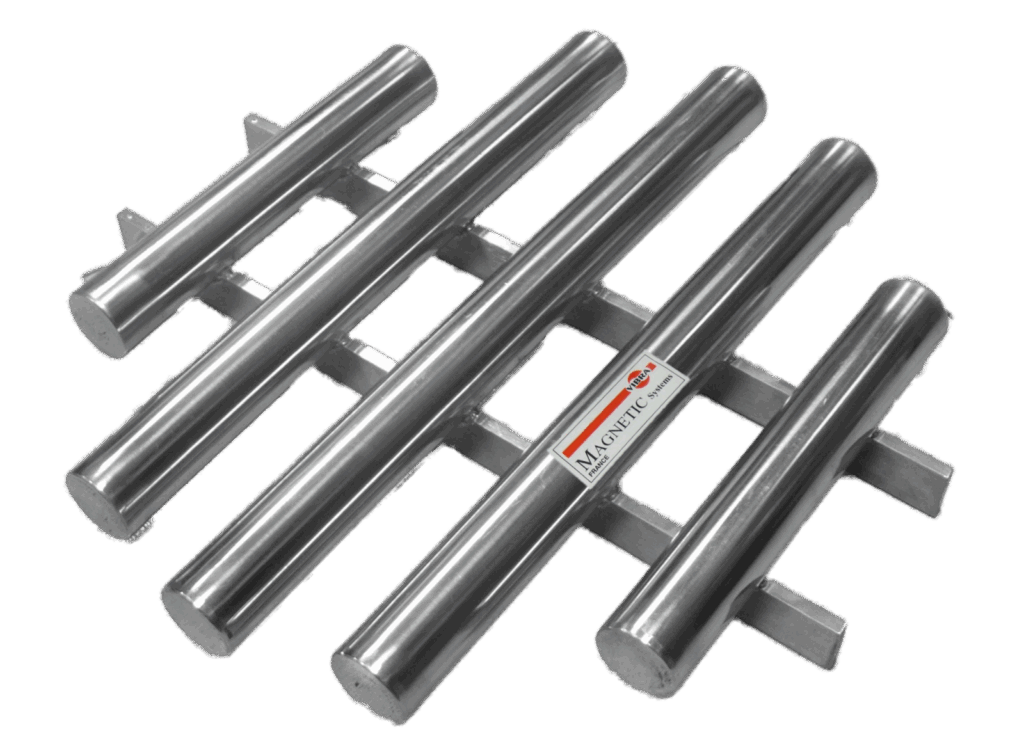
- Magnetic grids
- Rare earth separators
- Liquid trap magnets
Here, the focus shifts toward cleaner final products and regulatory quality control.
Common Mistakes Businesses Make
Using One Magnet For Everything
One of the most common issues is assuming a single industrial magnet can handle every contamination scenario.
In practice:
- Large tramp iron and fine iron behave differently
- Different material flow speeds affect separation
- Product density changes magnetic efficiency
- Wet and dry systems require different approaches
This is why many facilities eventually require layered magnetic separation systems.
Ignoring Magnetic Placement
Even high-quality magnets can underperform if placed incorrectly.
Poor placement may reduce:
- Magnetic exposure time
- Capture efficiency
- Material contact
- Contaminant retention
Magnet positioning often matters just as much as magnet strength itself.
Choosing Based Only On Gauss Ratings
Many buyers focus only on gauss strength without understanding operational suitability.
Higher gauss does not automatically mean better performance.
Factors such as:
- Magnetic reach
- Pole design
- Product flow
- Material thickness
- Conveyor speed
- Contamination type
all affect real-world performance.
An experienced magnet manufacturer malaysia supplier will usually evaluate the full application before recommending a system.
Types Of Magnets Used For Different Metals
Common Tramp Iron Removal Magnets
| Magnet Type | Typical Use |
| Overband Magnet | Conveyor protection |
| Suspension Magnet | Removing large ferrous debris |
| Magnetic Pulley | Continuous conveyor separation |
| Drum Magnet | Bulk material separation |
Common Fine Iron Separation Magnets
| Magnet Type | Typical Use |
| Drawer Magnet | Powder processing |
| Magnetic Grid | Hopper contamination removal |
| Rare Earth Tube Magnet | Fine ferrous separation |
| Liquid Trap Magnet | Liquid and slurry systems |
Many businesses working with an industrial magnet shop malaysia provider eventually combine multiple systems for better separation coverage.
Pricing Considerations
Why Industrial Magnet Costs Vary
Industrial magnetic separation pricing depends on factors such as:
- Magnet size
- Magnetic material grade
- Rare earth usage
- Operating temperature
- Industry compliance requirements
- Cleaning mechanism
- Automation level
- Installation complexity
Basic tramp iron removal systems may cost significantly less than high-intensity fine iron separation systems because precision separation often requires stronger rare earth magnets and tighter engineering tolerances.
Long-Term Cost Vs. Initial Cost
Cheaper magnets may result in:
- Poor separation efficiency
- Frequent maintenance
- Higher contamination risk
- Equipment damage
- Product rejection costs
For many Malaysian manufacturers, investing in the correct magnetic device malaysia solution can reduce operational losses over time.
Pros And Cons Of Tramp Iron Removal Systems
| Pros | Cons |
| Protects expensive equipment | May miss very fine particles |
| Reduces downtime risk | Large systems require installation space |
| Suitable for heavy industries | Some systems consume more power |
| Handles large contaminants effectively | Cleaning may require maintenance shutdowns |
Pros And Cons Of Fine Iron Separation Systems
| Pros | Cons |
| Improves product purity | Higher upfront cost |
| Supports quality compliance | Requires closer material contact |
| Captures micron-level contamination | Some systems need regular cleaning |
| Suitable for sensitive industries | Performance depends heavily on application design |
How Malaysian Businesses Should Choose The Right Magnet
Start With The Contamination Type
Before selecting any industrial magnet, businesses should first determine:
- What type of metal contamination exists
- Particle size range
- Contamination frequency
- Product flow conditions
- Wet or dry processing
- Processing temperature
This helps determine whether tramp iron removal or fine iron separation should take priority.
Consider Operational Goals
Questions businesses should ask include:
- Is the goal equipment protection?
- Is the goal product purity?
- Is regulatory compliance involved?
- Is contamination damaging downstream machinery?
- Are customers demanding cleaner products?
The answers usually determine the correct balance between magnetic reach vs. holding force.
Work With Experienced Magnet Specialists
A proper separation system often requires:
- Site assessment
- Product testing
- Magnetic field analysis
- Material flow evaluation
- Long-term maintenance planning
This is especially important for industries with high production throughput or sensitive contamination requirements.
Regulatory And Quality Considerations
Certain industries may require stricter contamination controls, particularly in food manufacturing and regulated industrial environments.
Businesses may need to align with:
- HACCP practices
- GMP / prerequisite program (PRP) requirements
- Food safety requirements
- Internal quality control procedures
(Source: MOH Malaysia – BKKM Food Safety & Quality (HACCP certification scheme requirements and references to Malaysian Standards used for HACCP and GMP implementation, e.g., MS 1480 and MS 1514))
Choosing the Right Magnet for the Right Situation
Tramp iron removal and fine iron separation may both involve magnets, but they solve very different industrial problems. Understanding magnetic reach vs. holding force, as well as product purity vs. equipment protection, helps Malaysian businesses choose more effective magnetic systems while reducing operational risks and contamination issues.
At Sematic Magnet, we help businesses identify the right magnetic separation approach for their industry, whether for heavy-duty tramp iron removal or precision fine iron separation. As a trusted magnet manufacturer Malaysia partner, we provide industrial magnet supply, R&D, testing, and application support tailored to real operational requirements.