Metal contamination is a common physical hazard in food manufacturing. During processing, small metal fragments can enter food products through equipment wear, machinery damage, or contaminated raw materials.
To reduce this risk, many food processing facilities install magnet separators within production lines to capture ferrous metal particles before they reach downstream stages.
However, magnets still need regular checking. Over time, they may become damaged, contaminated with buildup, or no longer sit in the right position within the process. HACCP (Hazard Analysis and Critical Control Point) magnet verification helps confirm that these separators remain effective as part of a HACCP-based food safety system, supporting contamination control and audit readiness for Malaysian manufacturers (Ministry of Health Malaysia, Food Safety and Quality Division, HACCP Certification Scheme).
Understanding Magnet Verification
Magnet verification is the documented process of checking that magnetic separators used in food production are correctly installed, properly maintained, and performing as intended to help remove ferrous contamination from the product flow.
Magnets installed in production lines act as a preventive control against contamination. They capture ferrous particles such as iron filings or small metal fragments released from machinery during normal operations.
Verification procedures help confirm that magnets continue performing effectively after installation and throughout routine production.
Typical Magnet Verification Activities
Most facilities carry out several checks during verification:
- Visual inspection of the magnet assembly
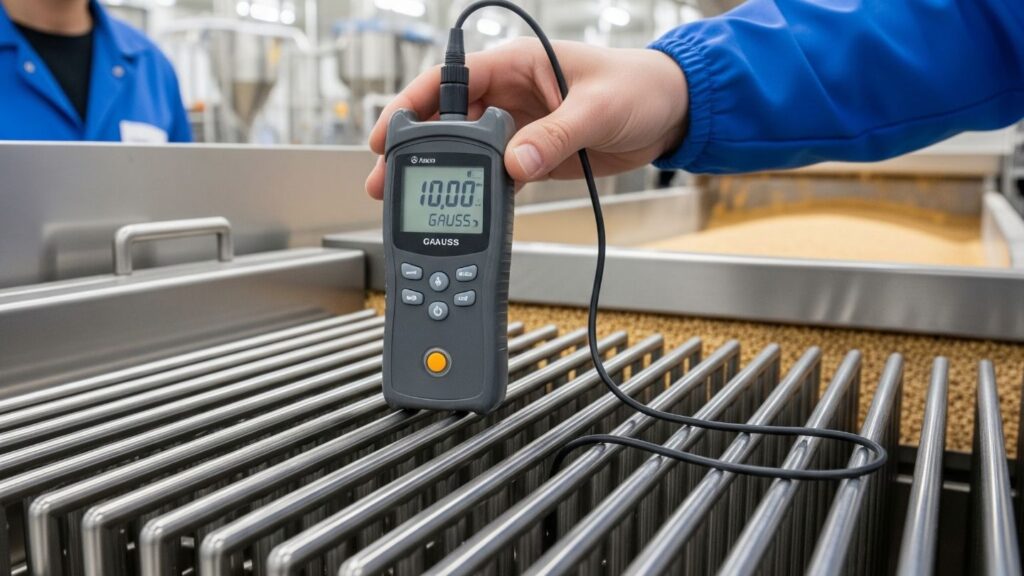
- Magnetic field checking using a gauss meter
- Position verification to confirm correct placement in product flow
- Documentation of verification results for audits and internal review
HACCP magnet verification forms part of the broader process used to confirm that hazard controls remain effective during ongoing operations.
Why is This Important?
Preventing Metal Contamination
Metal fragments can originate from multiple sources inside a food production facility.
Common sources include:
- Worn machinery parts
- Grinding or milling equipment
- Conveyor components
- Loose screws or fasteners
- Contaminated incoming ingredients
If these fragments enter finished products, they may create safety risks for consumers and lead to product loss, complaints, recalls, or costly downtime.
Magnetic separators provide an early barrier that helps capture ferrous contaminants before they move further along the production line.
Supporting HACCP Food Safety Systems
The HACCP magnet verification system helps food manufacturers identify and control hazards during production.
Under HACCP, companies are expected to identify hazards, implement suitable control measures, and verify that those controls continue working as intended. Magnet verification supports this process by providing documented evidence that magnetic separation controls are still functioning properly within the production environment (Ministry of Health Malaysia, Food Safety and Quality Division, HACCP Certification Scheme).
Without verification procedures, a damaged, poorly positioned, or weakened magnet may no longer capture contamination effectively.
Strengthening Audit Readiness
Many Malaysian food manufacturers participate in food safety assurance or certification programmes such as:
- HACCP Certification Scheme
- MeSTI
- GMP recognition
- Ministry of Health food safety inspections
During audits, inspectors or auditors may review records showing that hazard controls are implemented, checked, and maintained. Facilities that keep clear magnet verification records are generally better prepared to demonstrate contamination control as part of their wider food safety in Malaysia programme (Ministry of Health Malaysia, Food Safety and Quality Division, HACCP Certification Scheme; Ministry of Health Malaysia, Food Safety and Quality Division, MeSTI).
How HACCP Magnet Verification Works Within the System
HACCP magnet verification is not a standalone certification. Instead, it supports broader food safety in Malaysia systems such as HACCP and other documented food safety assurance programmes used in manufacturing.
These verification procedures help confirm that preventive contamination controls remain effective throughout daily operations.
Most facilities follow a structured verification process.
Step 1: Physical Inspection
The first step involves visually examining the magnet assembly.
Inspectors typically check for:
- Cracks or dents
- Surface corrosion
- Product buildup on magnet surfaces
- Structural damage to the magnet housing
Product buildup can reduce performance by limiting direct contact between contaminants and the magnetic surface.
Regular inspection helps ensure magnets remain clean, accessible, and structurally sound.
Step 2: Magnetic Field Checking
Magnet performance is commonly checked using a gauss meter, which measures magnetic field intensity at defined points on the magnet surface.
During checking:
- The gauss meter probe is placed at selected test points
- Measurements are taken consistently according to the facility’s procedure
- Results are compared against the manufacturer’s specification or the facility’s accepted internal magnet strength standard and application
If readings fall outside acceptable limits, the magnet should be assessed and corrective action should be taken.
Routine checking helps identify potential performance decline before contamination risks increase.
Step 3: Product Flow Verification
Magnetic separators must be installed in positions where the product passes close enough to the magnetic field for effective separation.
If product bypasses the magnet or flows too far away, contaminants may not be captured effectively.
Verification therefore checks whether:
- Magnets remain correctly installed
- Product flow passes through the intended magnetic zone
- Equipment modifications have affected magnet placement
- Access for cleaning and inspection remains practical
This step helps ensure magnetic separators remain properly positioned within the production process.
Step 4: Documentation and Record Keeping
Verification results should be recorded as part of the facility’s food safety in Malaysia documentation.
Typical verification records include:
- Date of inspection
- Magnet reading or check result
- Name of inspector
- Observations
- Maintenance or corrective action taken
Maintaining accurate documentation makes it easier for facilities to demonstrate implementation, monitoring, and follow-up during audits and internal reviews.
What Are the HACCP Requirements for Magnets?
HACCP focuses on whether hazard controls are suitable, implemented, verified, and documented. It does not prescribe one specific magnet model or separator design.
For magnets used in food processing environments, facilities generally need to demonstrate that:
- Magnets are installed at appropriate contamination risk points
- Product flow passes close enough to the magnetic field for effective separation
- Magnets are maintained in suitable condition
- Verification procedures are documented and implemented
- Corrective action is taken when problems are identified
This approach aligns with the broader requirement for food manufacturers to establish and implement food safety in Malaysia assurance programmes under Malaysian food hygiene requirements (Food Hygiene Regulations 2009; Ministry of Health Malaysia, Food Safety and Quality Division, MeSTI).
Common Magnet Installation Points
Depending on the production process and hazard analysis, magnets are often installed at points such as:
- Raw material intake
- Hoppers or gravity chutes
- Before grinding or milling stages
- In pipe or transfer systems
- Upstream of downstream inspection or packaging steps
Installing magnets at the right points helps intercept ferrous contamination earlier in the process.
How Often Should I Test My Magnets?
The right testing frequency depends on the contamination risk, product type, operating conditions, maintenance history, and supplier guidance.
Facilities processing abrasive materials or operating high-speed machinery may require more frequent checks than lower-risk production lines.
A practical magnet verification programme often includes:
- Routine visual inspection and cleaning at defined intervals
- Scheduled magnetic field checking based on risk
- Additional verification after repairs, equipment modification, or magnet replacement
A structured schedule helps prevent gradual performance decline from going unnoticed.
Why Is Verification Critical for Audits?
Food safety audits assess whether manufacturing facilities have effective systems in place to prevent hazards and maintain control over contamination risks.
Magnet verification helps demonstrate that preventive controls remain active, documented, and properly maintained.
During an Audit, Inspectors May Request
- Magnet verification records
- Maintenance logs
- Inspection reports
- Corrective action documentation
- Evidence of review after equipment changes
Why Documentation Matters
Consistent verification records show that a facility:
- Monitors contamination risks regularly
- Maintains preventive equipment properly
- Responds to performance issues in a documented way
- Supports its wider HACCP or food safety assurance programme
In Malaysia, documented food safety systems are especially important for businesses seeking or maintaining recognition under schemes such as HACCP and MeSTI (Ministry of Health Malaysia, Food Safety and Quality Division, HACCP Certification Scheme; Ministry of Health Malaysia, Food Safety and Quality Division, MeSTI).
Examples of Magnet Verification in Action
Spice Processing Facility
A Malaysian spice processing company installs magnetic grates before grinding machines.
During scheduled verification, technicians detect weaker-than-expected readings during magnetic field checks. The magnets are replaced and the action is recorded, reducing the risk of contamination reaching downstream equipment.
Flour Milling Operation
A flour mill installs inline magnetic separators along its production line.
Routine verification confirms that the magnets remain properly positioned and continue operating within the facility’s accepted magnet strength standard and performance baselines. Verification logs are retained as part of audit documentation.
Cocoa Processing Plant
A cocoa ingredient manufacturer supplying export markets performs regular magnet checks as part of its food safety programme.
Records show that the contamination control system is reviewed consistently, helping the facility demonstrate stronger audit readiness.
Other Best Practices for Magnet Verification
Map Magnet Locations Across Production Lines
Facilities should maintain diagrams or line references showing where magnetic separators are installed within the production process.
This makes it easier to review whether contamination risks are being controlled at the right stages.
Train Staff Responsible for Verification
Employees responsible for magnet verification should be trained to:
- Use gauss meters correctly
- Identify visible damage or buildup
- Record results consistently
- Escalate problems when results fall outside acceptable limits
Training improves the consistency and reliability of verification procedures.
Implement Corrective Action Procedures
If a magnet fails inspection or does not meet the facility’s required magnet strength standard, corrective action should be taken promptly.
Common actions include:
- Replacing or servicing the magnet
- Re-checking the affected equipment
- Reviewing whether product safety may have been affected
- Recording the issue and corrective action taken
Corrective action procedures help ensure contamination risks are addressed quickly and transparently.
Ensure Your Magnetic Separation System Is Audit-Ready
Magnet verification is an important part of maintaining reliable contamination control in food manufacturing environments. Regular checking, proper documentation, and correct magnet placement all help confirm that magnetic separators continue performing effectively throughout daily production.
At Sematic Magnet, we are a magnet manufacturer in Malaysia and also supplier, providing magnetic separation solutions designed for food processing environments. We ensure magnets are properly selected, installed, and maintained as part of an effective contamination control strategy.
If your facility needs stronger ferrous contamination control or more reliable magnet separators, we can help you test and choose the right magnetic solutions to support your HACCP-based food safety programme, verification procedures, and audit readiness.